Planets near the Moon
–
Moonrise–
Moonset–
Distance–
Next full moon–
Time travelDrag the slider and watch the shadow move across the Moon over the next 30 days
Today
Today
Tonight’s best moment: –
Where should I look?–
Weather–
Tip–
The sky, explained
Everything happening around the Moon
Full moon names
Size in perspective
The Moon’s orbit is an ellipse. At its closest it looks larger and brighter than at its farthest.
ClosestFarthest
Sun & twilight
Three twilights before it gets dark
Each twilight ends when the Sun has sunk another six degrees. After astronomical twilight the sky is fully black.
Spring tide
When Sun, Earth and Moon line up – at new and full moon – they pull in the same direction and the tides are at their largest.
Along the shadow line tonight
The craters best seen right now
Where light meets dark, crater walls cast long shadows – the surface looks almost three-dimensional. The edge moves every night.
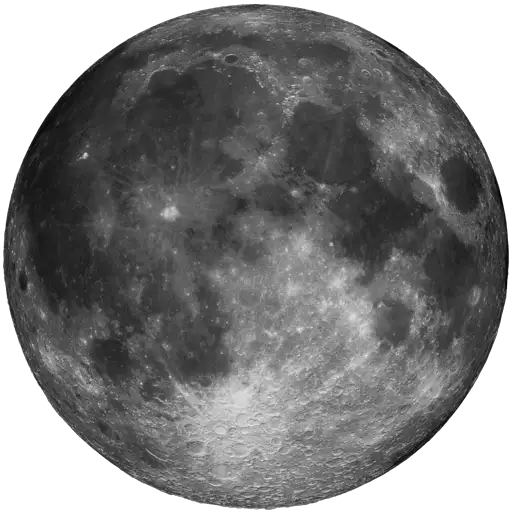
The Moon’s wobble · libration
We don’t see just half – we see 59%
The Moon always turns the same face to us – almost. Its orbit is elliptical and tilted, so over a month it rocks back and forth and lets us peek around the edges.
In longitude–
In latitude–
Extra visible today–
Eclipses
Your birth moon
What did the Moon look like when you were born?
Enter a date – a birthday, a wedding, a first date – and we’ll work out exactly how the Moon looked.
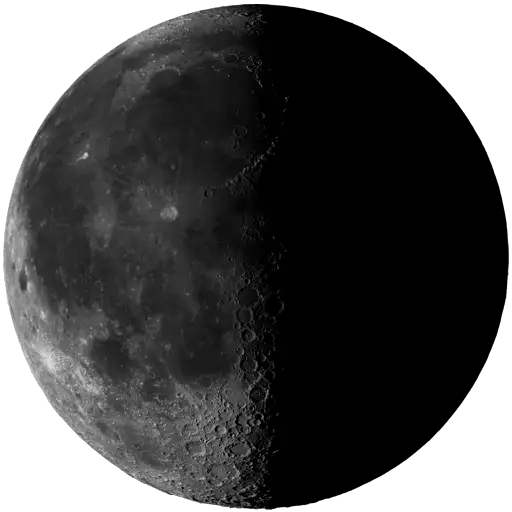
Moon calendar
Widget

The Moon on your own site
MOONPOSITION.COM
Learn more
Guides to seeing – and photographing – the Moon
Photo · 8 minPhotograph the Moon – from phone to telephotoWhy does the Moon turn into a white blob on your phone? Exposure, focus and why the half moon beats the full moon.
Explained · 5 minWhy the Moon looks huge on the horizonThe Moon illusion fools the brain – not the eye. Hold up a thumbnail and test it tonight.
Basics · 7 minThe Moon’s phases – why the shadow movesThe shadow isn’t Earth’s – it’s the Moon’s own night. The whole 29.5-day cycle.


Details for your location
The whole day, the sky and the planets
The sky from here
The centre is straight up (zenith), the edge is the horizon.